

Attached vs. Freestanding Patio Covers: Which Is Right for Your DFW Backyard?
A patio cover can completely change how often you use your backyard. In North Texas, having a shaded outdoor space can mean the difference between avoiding the backyard during the hottest part of the day and having a comfortable place to relax, cook, and entertain.
But before choosing finishes, stain colors, lighting, or ceiling details, there is a bigger decision to make:
Should your patio cover be attached to your home or built as a freestanding structure?
Both can create a beautiful, functional outdoor living space. The better choice depends on your home’s existing roofline, backyard layout, drainage, the amount of coverage you want, and most importantly, how you plan to use the space.
Here are some of the things we consider when helping DFW homeowners decide.
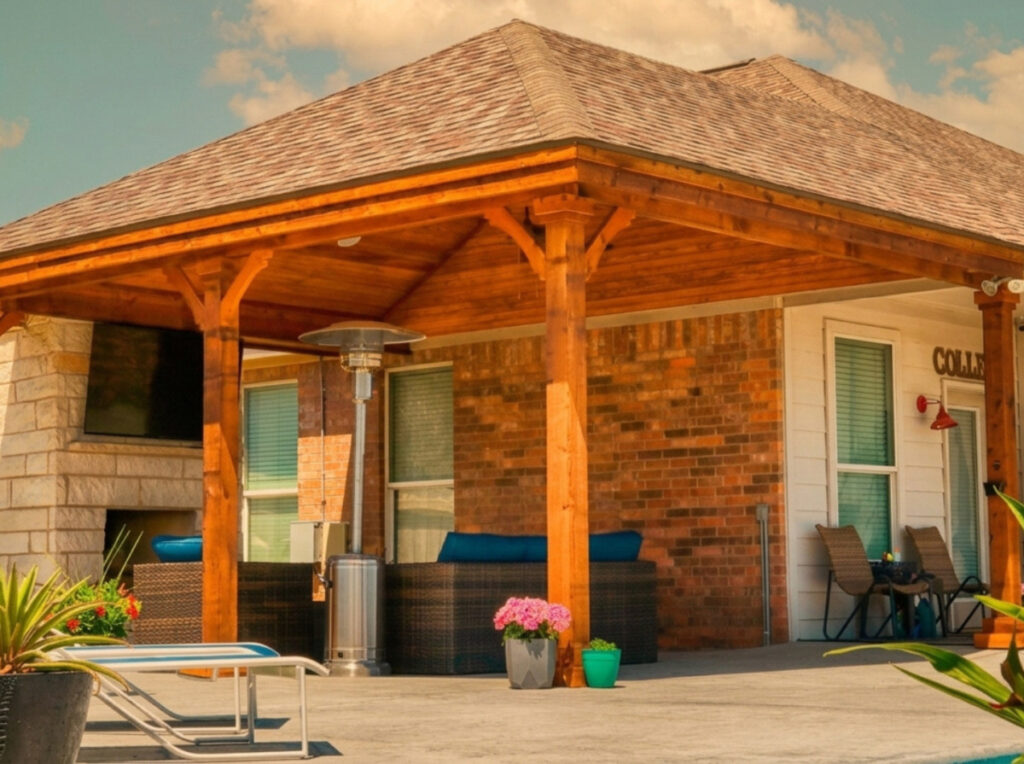
What Is an Attached Patio Cover?
An attached patio cover connects directly to your home, creating a natural extension of your indoor living space.
This style works especially well when the patio is directly outside a frequently used entrance, such as the kitchen or living room. Instead of stepping outside into an uncovered area, you transition directly into a protected outdoor space.
An attached patio cover can be designed to complement your home’s existing architecture, including its roofline, materials, colors, and overall style.
For homeowners who want the backyard to feel like an extension of the house rather than a completely separate destination, an attached structure is often worth considering.
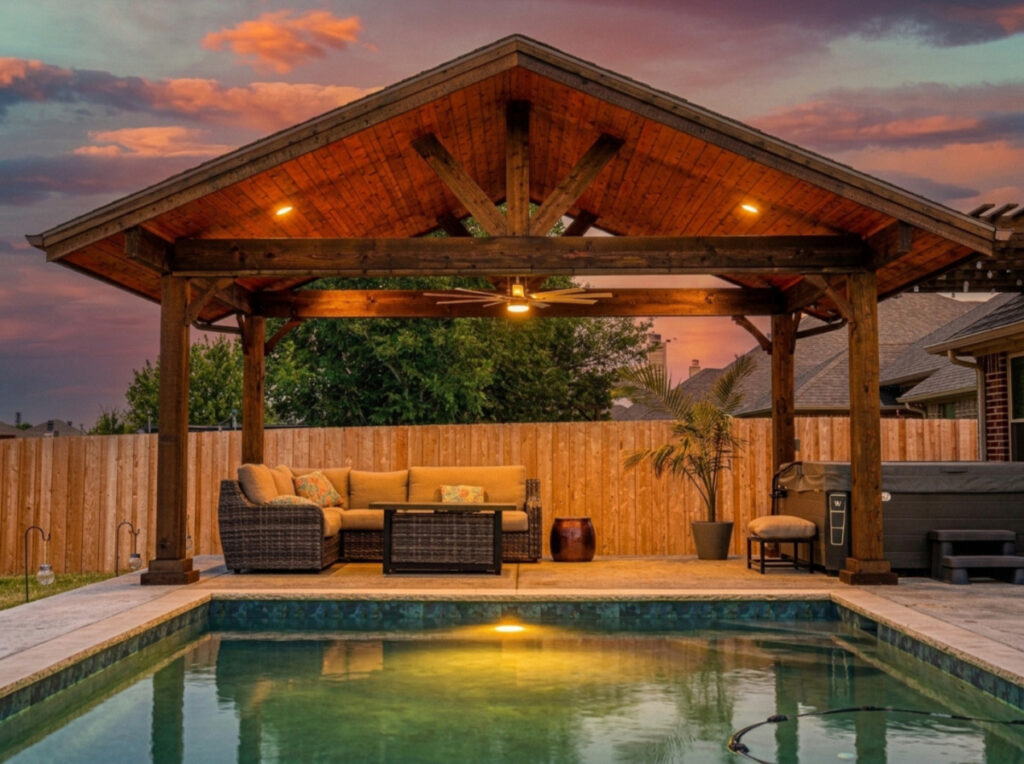
What Is a Freestanding Patio Cover?
A freestanding patio cover is a separate structure that does not rely on the home for support.
That independence gives you more flexibility when deciding where your covered outdoor area should go.
For example, your ideal gathering space might be closer to the pool, farther into the backyard, beside an outdoor kitchen, or positioned where you have a better view. A freestanding cover allows the structure to be designed around how you want to use your property rather than being limited to the back wall of your home.
Freestanding doesn’t have to mean disconnected, either. With thoughtful planning, walkways, concrete, landscaping, lighting, and other outdoor features can visually connect the structure with the rest of the backyard.
1. Start With Your Home’s Existing Roofline
One of the first things we look at when considering an attached patio cover is the home’s existing structure.
Not every roofline offers the same options.
Roof height, pitch, windows, doors, gutters, existing overhangs, and the location where the new roof would connect can all affect the design.
The goal isn’t simply to “add a roof.”
A well-designed attached patio cover should look intentional, as though it belongs with the original home. The proportions and roof design should complement the house rather than making the addition feel like an afterthought.
In some cases, the home’s architecture makes an attached cover a natural choice. In others, working around a complicated or low roofline may make a freestanding structure worth considering.
This is one reason an onsite consultation is so valuable. What looks straightforward in a backyard photo can be very different once rooflines, elevations, drainage, and structural requirements are considered.
2. Look at How Your Backyard Is Already Laid Out
Your backyard should help determine where the patio cover goes, not the other way around.
Think about where people naturally gather.
Is your existing patio directly outside the back door? Is your pool farther into the yard? Are you planning an outdoor kitchen? Is there a particular part of the property with a better view or more privacy?
For many homeowners, an attached patio cover makes sense because the existing concrete patio is already positioned next to the house.
But suppose you’re creating a separate poolside lounge, grilling area, or backyard entertainment zone. In that case, a freestanding patio cover may give you more freedom to put shade exactly where you need it.
Before deciding, think about the entire backyard as one connected space.
Where will people walk?
Where will they sit?
Where will you cook?
Where does the afternoon sun hit?
A good outdoor living design should make moving between these areas feel natural.
3. Decide How Much Coverage You Actually Need
Bigger isn’t automatically better.
The right amount of coverage depends on what you want underneath the patio cover.
A simple seating area may require less room than a complete outdoor entertainment space with a dining table, outdoor kitchen, fireplace, TV, and multiple seating zones.
Before deciding on the structure, make a realistic list of what you want the covered area to accommodate.
For example:
- Outdoor dining
- Lounge furniture
- An outdoor kitchen or grill station
- A television
- A fireplace
- Ceiling fans
- Lighting
- Space for entertaining family and friends
Once those priorities are clear, it becomes much easier to determine the appropriate location, dimensions, and type of patio cover.
Planning this early also helps prevent a common problem: finishing the project and realizing the covered area isn’t quite large enough for the way you actually wanted to use it.
4. Don’t Forget About Texas Rain and Drainage
Shade may be the first reason you’re considering a patio cover, but water management is just as important.
North Texas weather can bring heavy rain, strong winds, and sudden storms. When you add a roof to your backyard, you’re also changing where rainwater travels.
That water needs somewhere to go.
With an attached patio cover, the new structure has to work with the home’s existing roof and drainage system. Roof pitch, gutters, downspouts, and the surrounding concrete all need to be considered.
Freestanding structures have their own drainage considerations. Water still needs to be directed away from the covered area and toward an appropriate drainage path.
Concrete is another part of the equation. Proper grading helps move water away from structures instead of allowing it to collect around the patio or foundation.
Drainage isn’t the most exciting part of choosing among covered patio ideas in Texas, but it can be one of the most important details for the long-term performance of your outdoor space.
5. Think About How You’ll Use the Patio on a Normal Tuesday
It’s easy to design a backyard around the idea of a big summer party.
But how will you use it when no one is visiting?
That question can tell you a lot about where your patio cover should go.
If you imagine stepping out of the kitchen with your morning coffee, watching TV outside after dinner, or grilling a few nights each week, an attached patio cover may provide the convenience you’re looking for.
If you picture spending most of your backyard time around the pool or gathering in a dedicated entertainment area farther from the house, a freestanding structure may fit your lifestyle better.
The best outdoor spaces aren’t only designed for special occasions. They’re designed around everyday life.
Attached vs. Freestanding Patio Cover: A Quick Comparison
| Attached Patio Cover | Freestanding Patio Cover | |
| Location | Connected directly to the home | Can be positioned elsewhere in the yard |
| Best for | Extending indoor living outdoors | Creating a separate backyard destination |
| Convenience | Easy access from the house | Depends on placement |
| Design considerations | Must work with the home’s roofline | Greater freedom in positioning |
| Common uses | Dining, kitchens, TV areas, everyday lounging | Poolside areas, entertainment spaces, destination seating |
| Drainage | Integrates with the home’s roof and drainage | Requires its own drainage planning |
Neither option is automatically better. The goal is to choose the structure that makes the most sense for your home and the way you want to use your backyard.
What If You’re Planning More Than a Patio Cover?
This is where planning ahead becomes especially important.
Maybe you’re starting with a patio cover now but eventually want to add an outdoor kitchen, fireplace, decorative concrete, pool, or other backyard features.
Even if everything isn’t being built at the same time, thinking about those future additions now can help create a more cohesive backyard.
For example, the location of a future outdoor kitchen could affect the size of your patio cover. A future pool might change where you want your main seating area. New concrete could affect drainage and traffic flow.
Planning the backyard as a complete space can help each improvement work together rather than feeling like a collection of unrelated projects added over time.
So, Which Patio Cover Is Right for Your DFW Home?
If your goal is to create a seamless extension of your indoor living space, an attached patio cover may be the better fit.
If you want more flexibility with placement or you’re creating a separate destination around a pool, outdoor kitchen, or entertainment area, a freestanding patio cover may make more sense.
But there isn’t a universal answer.
Every DFW property has a different roofline, yard size, drainage pattern, sun exposure, and layout. That’s why choosing a patio cover should start with the property itself rather than a standard design.
At Christian Carpentry, we help homeowners look at the entire space before deciding what to build. During a free onsite consultation, we can evaluate your existing home and backyard, discuss how you want to use the space, and help determine what type of patio cover makes the most sense for your project.
Whether you’re researching patio covers in DFW, comparing attached and freestanding structures, or planning a complete outdoor living space, the right design starts with understanding how your home and backyard work together.
Ready to explore what’s possible for your backyard?
Schedule a free consultation with Christian Carpentry and let’s start planning an outdoor space designed around your home, your property, and the way you want to enjoy it.